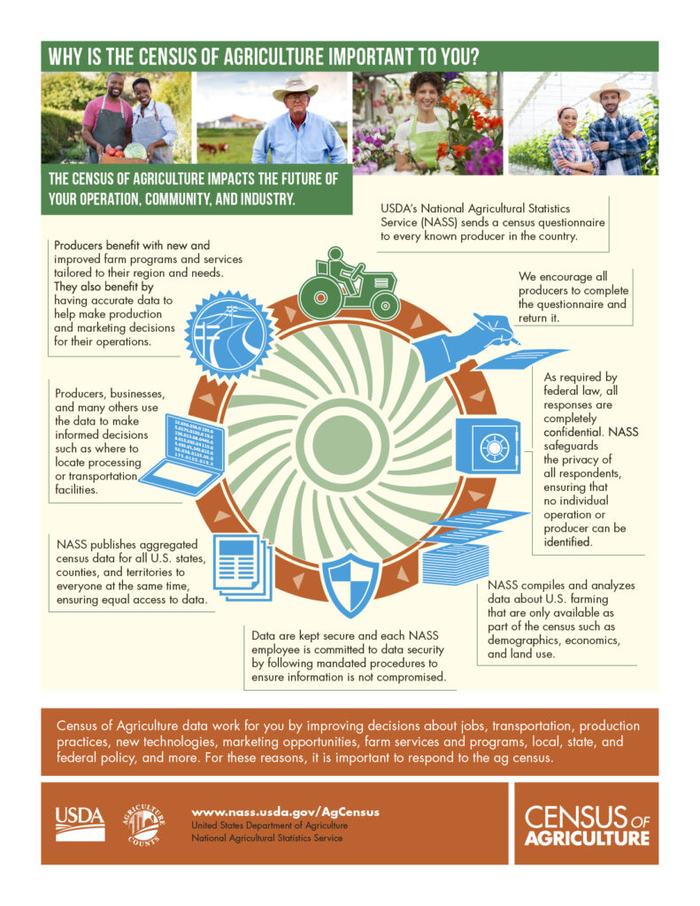
The Census of Agriculture, taken every five years, is a complete count of U.S. farms and ranches and the people who operate them. Even small plots of land count as long as $1,000 or more of agricultural products were raised and sold, or normally would have been sold, during the Census year. For America’s farmers and ranchers, the Census of Agriculture is their voice, their future, and their opportunity.
Census of Agriculture data are used by those who serve farmers and rural communities — federal, state, and local governments, agribusinesses, researchers, trade associations, and many others. Companies and cooperatives use the data to determine where to locate facilities that will serve agricultural producers. Community planners use the information to target needed services to rural residents. Legislators use census data when shaping farm policies and programs. Students, educators, and researchers use the data as part of their ongoing studies, education, and research initiatives. In Currituck County, where the percent population growth ranked #1 in the state in 2022, this data helps inform decisions around community growth, the importance of agriculture, and ultimately is used to help shape the County for the future.
The response deadline for the 2022 Census of Agriculture is February 6th, 2023. Learn more about the 2022 Agriculture Census on theUSDA link, and respond to thesurvey online. To ensure that your agricultural operation is counted in the census, you can sign up on theNASS siteto get your unique survey code.
For more information or for questions, please contact Adam Formella at 252-232-2261 or email adam_formella@ncsu.edu.